
Degaussing
Applies a strong magnetic field to randomize the stored magnetic alignment that represents data, making it unreadable.
Also known as data destruction: a process that renders access to target data on the media infeasible for a given level of effort.
If your organization is in a highly regulated industry, such as finance, insurance, technology, pharmaceuticals, communications, energy, healthcare, the public sector or education, proper data sanitization is essential, not an option or an afterthought.
Read our Data Sanitization Guide or contact us to find out more.
Applies a strong magnetic field to randomize the stored magnetic alignment that represents data, making it unreadable.
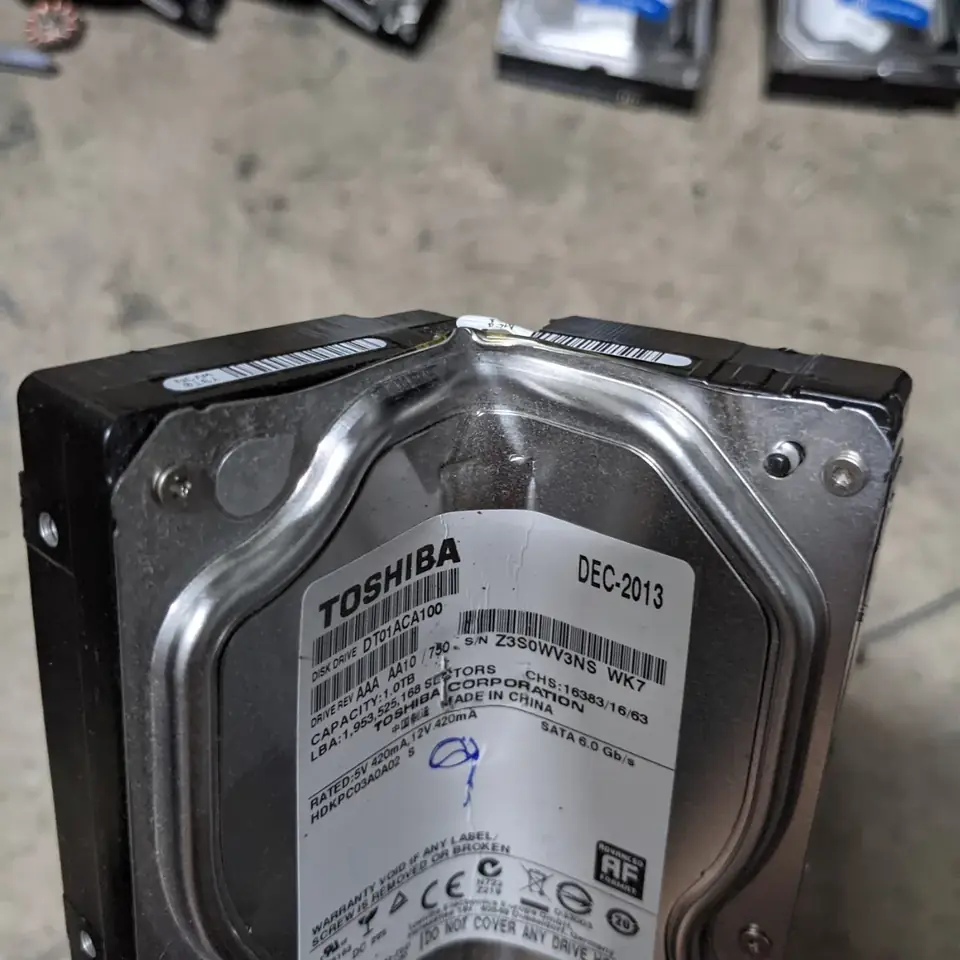
Bends the drive in half to destroy the read/write head, actuator, controller board and storage platters.
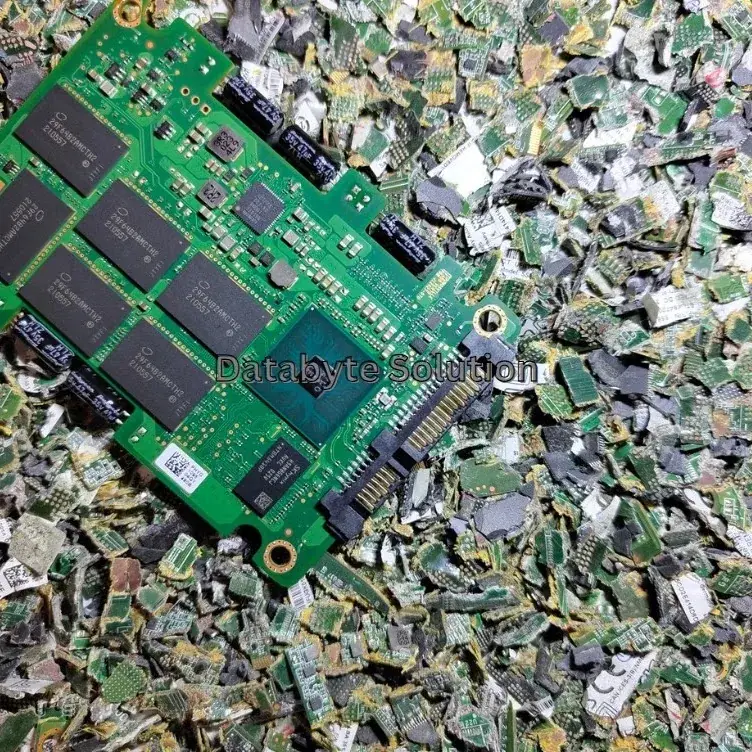
Destroys any storage medium irreversibly, disintegrating each one into hundreds of separate pieces.

Overwrite, Secure Erase and Cryptographic Erase: old data is securely erased and/or new data is written over it.
Sanitization refers to a process that renders access to target data on the media infeasible for a given level of effort (NIST SP 800-88 Rev 1, page iv).
The widely accepted NIST 800-88 Rev 1 guidelines classify data sanitization into three levels: Clear, Purge and Destroy. All three are acceptable methods; the right choice mostly depends on how your organization classifies the importance of the data.
You can read more about the different standards for data sanitization (NIST 800-88 Rev 1, NSA/CSS 9-12, NSA EPL) on our Standards page.
For you and your organization's protection.
It is no longer a matter of if, but how and when an organization's information is breached. End-of-life equipment is one of the key routes into an organization.
By preventing information breaches when disposing of used IT equipment, organizations close off one more route of attack and avoid potential financial losses, lawsuits, or regulatory fines. According to IBM's Cost of a Data Breach Report, the average cost per record of a data breach in 2021 was USD 161.
Two independent studies by Kessler International and Blancco Technology Group found that 40% and 67% of disk drives bought from e-commerce sites still contained sensitive information from their previous use, including personal data, financial information, company emails, spreadsheets and photographs.
The modern storage environment is evolving rapidly. Data may pass through multiple organizations, systems and storage media in its lifetime, and this is only increasing as storage moves towards distributed, cloud-based architecture. As a result, more parties than ever are responsible for sanitizing media effectively, and the potential for sensitive data to be collected and retained on media is substantial. This responsibility is not limited to the organizations that create or finally store sensitive data: it extends to every intermediary that stores or processes the information along the way.
Sophisticated access controls and encryption make it harder for an attacker to reach sensitive information directly. So attackers may focus instead on residual data on media that has left an organization without sufficient sanitization. Effective sanitization and tracking of storage media are therefore critical to protecting sensitive data against unauthorized disclosure, whether that information is on paper, optical, electronic or magnetic media.
An organization may dispose of media by charitable donation, internal or external transfer, or recycling in line with applicable laws and regulations. Even internal transfers need scrutiny, as legal and ethical obligations to protect data such as personally identifiable information (PII) are greater than ever. Whatever the media's final destination, the organization must make sure no easily reconstructed data remains on it once it leaves the organization's control, or once it is no longer protected at the confidentiality level of the data it holds.
Tell us what you have and where it is. We reply with a no-obligation quote.